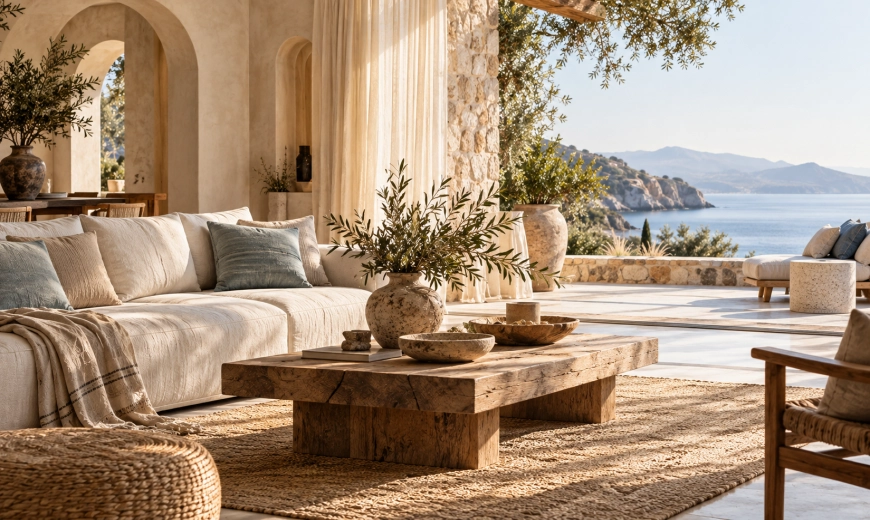
Mediterranean coastal style combines the relaxed feeling of seaside living with the warmth and character of Mediterranean interiors. Instead of relying on strong nautical colours or obvious beach decorations, this style focuses on natural materials, earthy tones, soft textures, handmade details, and furniture with a simple, timeless character.
Inspired by the homes of the Mediterranean, the look works especially well when natural stone, solid wood, linen, cotton, and warm neutral colours are brought together. The result is a home that feels calm, welcoming, and connected to its surroundings.
1. Start With a Warm Mediterranean Colour Palette
A Mediterranean coastal home does not need to be entirely white and blue. A more natural palette can create a warmer and more sophisticated atmosphere.
Begin with shades such as warm white, ivory, sand, beige, stone, taupe, soft brown, and muted terracotta. These colours can be combined with subtle coastal tones such as faded blue, sea green, or soft grey.
The goal is to create a palette that feels inspired by the landscape rather than by traditional beach decoration. Think sun-washed walls, sandy beaches, natural stone, aged wood, and Mediterranean clay.
2. Bring Natural Stone Into the Interior
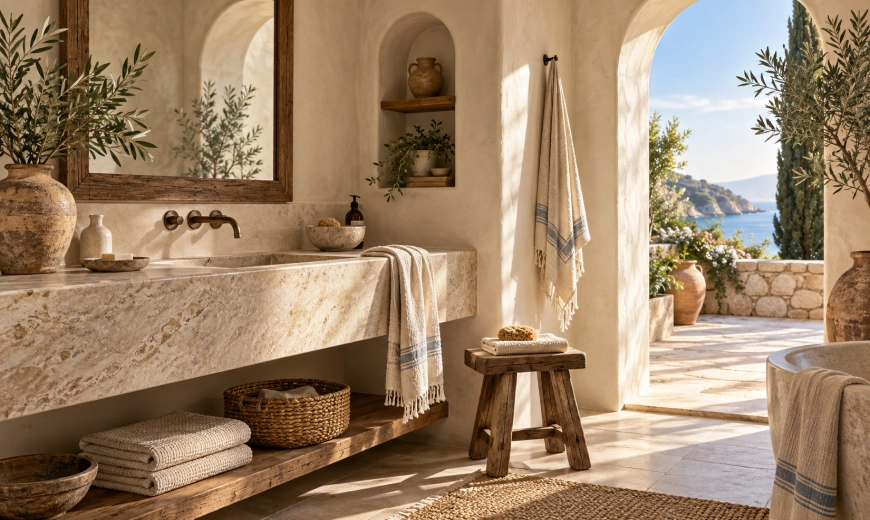
Natural stone is one of the easiest ways to introduce Mediterranean character into a home. Marble, travertine, and other natural stones add texture and visual depth while keeping the overall look understated.
A marble tray, stone accessory, bathroom surface, or natural stone sink can become a subtle focal point without overwhelming the room.
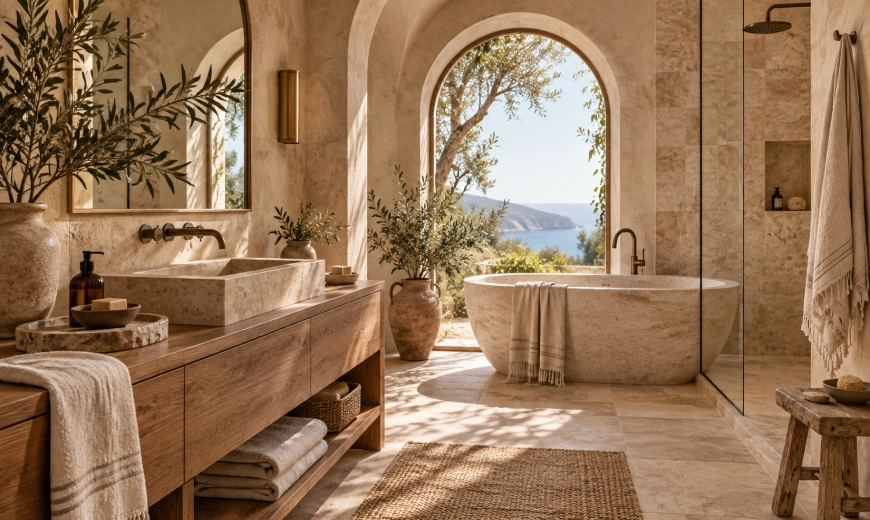
For a bathroom inspired by the Mediterranean coast, a natural marble bathroom sink can create a strong connection to traditional stone craftsmanship while maintaining a clean contemporary appearance.
For a more textured look, a travertine sink brings the warm, organic character of natural stone into the bathroom.
3. Choose Warm, Natural Wood
Wood balances the coolness of stone and gives a Mediterranean coastal interior a warmer and more lived-in feeling.
Choose furniture with visible grain, natural finishes, and simple silhouettes. Solid wood does not need elaborate detailing to make an impression. Its natural texture can become part of the decoration itself.
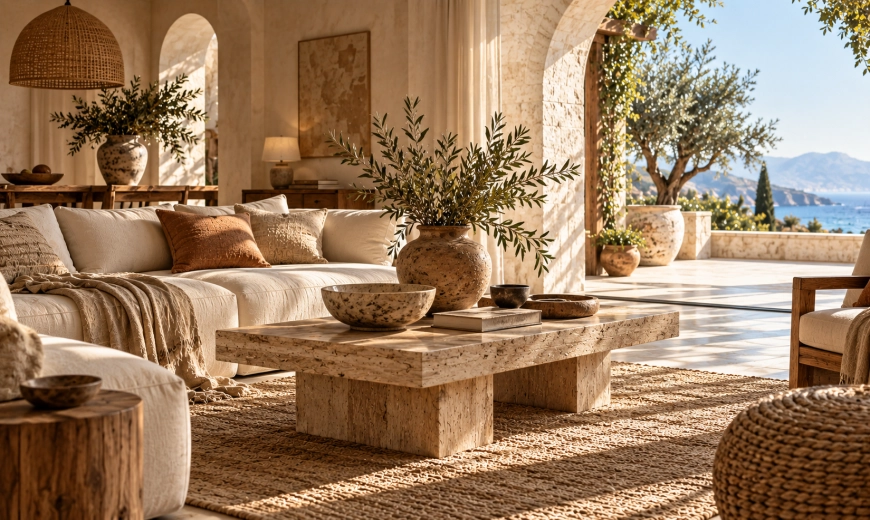
A solid wood dining table can create a welcoming centrepiece for an open dining area, while a natural wood coffee table can add warmth to a relaxed living room.
For smaller spaces, wooden side tables and nightstands can introduce the same character without making the room feel heavy.
4. Use Linen and Cotton for Softness
Mediterranean coastal interiors are not only about hard natural materials. Soft textiles are essential for creating the relaxed atmosphere associated with seaside homes.
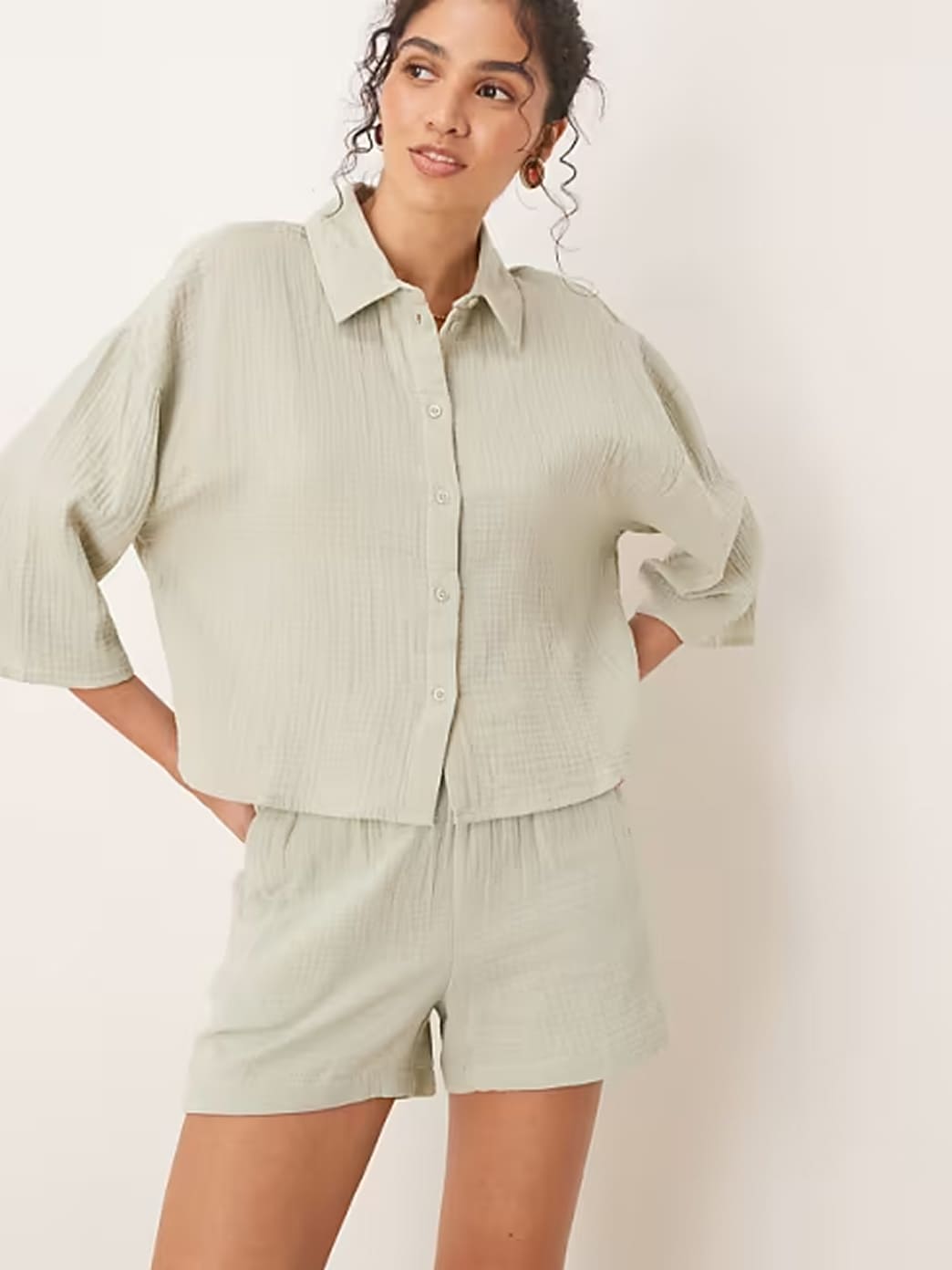
Linen and cotton work particularly well because they have a natural appearance and a comfortable, slightly imperfect texture. Use them for curtains, cushions, table linens, throws, towels, and bedding.
Choose neutral or softly faded colours rather than highly saturated patterns. Natural fabrics should feel effortless rather than overly styled.
5. Keep Furniture Simple
Mediterranean homes often feel comfortable because the furniture is functional rather than excessive. Avoid filling every corner with decorative pieces. Instead, choose a smaller number of well-made items with natural materials and simple forms.
Let the texture of the material provide visual interest. A wooden table, stone accessory, linen textile, or handmade ceramic object can have more impact than a room filled with unnecessary decoration.
This approach also allows natural light and architectural details to remain important parts of the interior.
6. Add Handmade and Organic Details
One of the defining qualities of Mediterranean interiors is the relationship between the home and traditional craftsmanship.
Look for objects that show the character of their material or the hand of the maker. Marble accessories, wooden objects, woven textiles, ceramic pieces, and naturally textured decorative elements can all contribute to this feeling.
Small details can make a significant difference. A marble soap dish or a natural stone tray, for example, can bring Mediterranean materiality into an otherwise simple bathroom.
The aim is not to make the interior look rustic. Instead, combine traditional materials with clean contemporary forms.
7. Let Natural Light Be Part of the Design
Natural light is central to the Mediterranean atmosphere. Whenever possible, keep windows unobstructed and use lightweight curtains that allow daylight to move through the room.
Mirrors can also help reflect natural light and make an interior feel more open. An oversized floor mirror can work particularly well in a living room, bedroom, or hallway while adding another natural focal point.
Rather than relying heavily on artificial lighting during the day, allow sunlight, warm surfaces, and natural materials to create much of the atmosphere.
8. Create a Mediterranean Coastal Bathroom
The bathroom is one of the easiest spaces in which to introduce Mediterranean coastal style.
Start with warm stone tones, natural textures, simple fixtures, and understated accessories. Travertine and marble work especially well because their natural variation adds character without requiring strong patterns.
Combine a natural stone sink with soft cotton towels, a simple wooden stool, and a few carefully chosen bathroom accessories. A marble bathroom tray can help organise everyday essentials while adding another layer of natural texture.
The result should feel more like a quiet Mediterranean retreat than a highly decorated bathroom.
9. Use Texture Instead of Too Much Decoration
One of the simplest ways to achieve this style is to let texture replace excessive decoration.
Combine smooth marble with textured wood, soft linen with woven materials, and natural stone with cotton. These contrasts create depth while keeping the colour palette calm.
This is particularly useful in neutral interiors. When the colours are restrained, differences in texture become more noticeable and give the room personality.
10. Bring the Mediterranean Feeling Throughout the Home
Mediterranean coastal style works best when it feels consistent throughout the home rather than being limited to one room.
Repeat a few key materials across different spaces. For example, natural wood can appear in the living room and bedroom, while marble or travertine can be introduced through bathroom accessories and decorative objects.
Soft linen and cotton textiles can connect the rooms visually, while warm neutral colours create continuity from one space to another.
Less Beach House, More Mediterranean Home
The most successful Mediterranean coastal interiors do not try to recreate a beach holiday literally. Instead, they capture the qualities that make Mediterranean homes feel relaxed: natural materials, warm light, simple furniture, tactile surfaces, and a connection with nature.
Rather than adding seashells, nautical decorations, or strong blue-and-white patterns, focus on the materials themselves. Stone, wood, linen, cotton, and handmade objects can create a coastal atmosphere that feels more timeless and personal.
Explore the DYM Living Coastal Living Collection for natural pieces inspired by relaxed Mediterranean interiors, or discover the Natural Stone Collection and Solid Wood Collection to bring authentic natural materials into your home.
Final Thoughts
Bringing Mediterranean coastal style into your home is ultimately about creating a feeling of ease. Choose natural materials, keep the colour palette warm and understated, introduce soft textiles, and allow the character of wood and stone to remain visible.
With fewer but more meaningful pieces, your home can feel connected to the Mediterranean landscape while remaining comfortable, contemporary, and timeless.