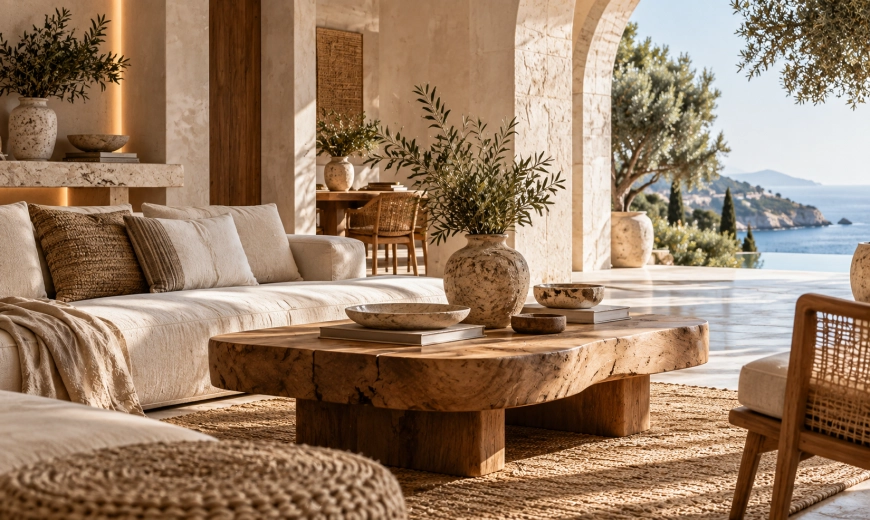
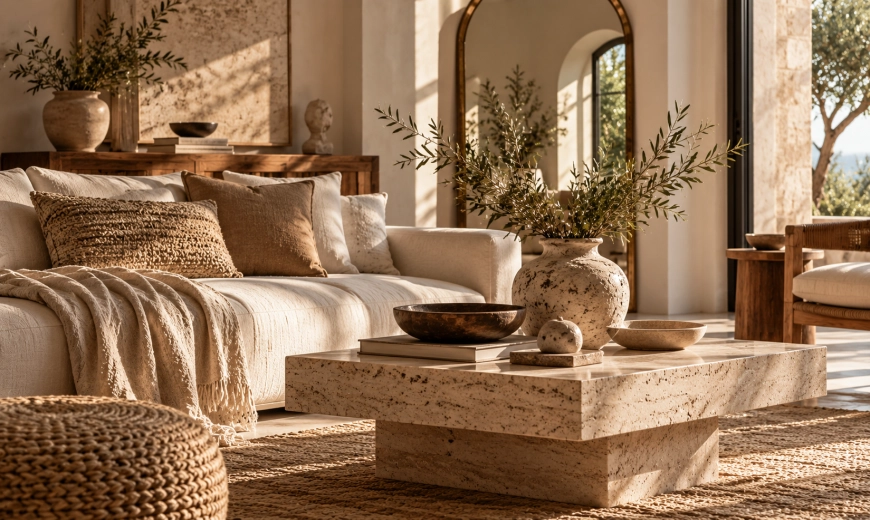
A neutral home does not have to feel plain or cold. When soft colours are combined with different textures, natural materials, and carefully chosen decorative details, a neutral interior can feel warm, comfortable, and full of character.
The key is not to add more colours, but to create visual interest through materials. Natural wood, stone, linen, cotton, woven fabrics, ceramics, and softly aged surfaces can work together to create a calm and timeless atmosphere.
In this guide, we explore simple ways to layer textures in a neutral home while keeping the overall look relaxed, natural, and refined.
1. Start With a Soft Neutral Colour Palette
Before layering textures, create a simple colour foundation. Warm white, ivory, beige, sand, cream, taupe, and soft brown provide an ideal background for natural materials.
A neutral palette allows texture to become the main source of visual interest. Instead of relying on strong colours, you can create depth by combining smooth, rough, soft, matte, and natural surfaces.
For a warmer interior, consider combining creamy walls with natural wood furniture, linen textiles, stone accessories, and subtle earthy tones.
2. Add Natural Wood for Warmth
Wood is one of the easiest ways to introduce warmth into a neutral interior. Its natural grain creates movement and character while keeping the overall atmosphere understated.
A solid wood dining table can become the visual anchor of a dining space, while a wood coffee table can bring a more relaxed natural element into the living room.
For bedrooms and smaller spaces, a solid wood nightstand adds texture without overwhelming the room.
Try combining different wood surfaces rather than matching every piece exactly. Slight variations in tone and grain can make a neutral room feel more natural and collected.
3. Bring in the Texture of Natural Stone
Stone introduces a different type of texture. Unlike wood, which feels warm and tactile, marble and travertine add a sense of solidity and quiet sophistication.
Small stone accessories are an easy starting point. A marble decorative tray can be placed on a coffee table or console, while a marble soap dish can add a subtle natural detail to a bathroom.
For larger applications, a natural marble bathroom sink or a travertine sink can become a strong architectural element while remaining within a neutral colour palette.
4. Layer Linen and Cotton Textiles
Soft textiles prevent a neutral interior from feeling too hard or minimal. Linen and cotton are especially useful because they add softness while maintaining a natural, understated appearance.
Layer a relaxed linen textile over a wooden surface, combine cotton cushions with a simple sofa, or place a soft throw over an armchair.
The goal is not to use many patterns. Instead, focus on differences in weave, thickness, and softness. A loosely woven textile next to a smoother cotton surface can create enough contrast without introducing visual clutter.
5. Combine Smooth and Rough Surfaces
One of the simplest principles of texture layering is contrast.
Pair a smooth marble surface with natural wood. Place a soft textile next to a rough stone accessory. Combine a matte ceramic object with a polished surface. These small contrasts make a neutral room more visually interesting.
You do not need dramatic differences. Even subtle variations in surface finish can create depth when the colour palette remains consistent.
6. Use Mirrors to Add Light and Depth
Texture is not only about materials that you can touch. Reflection can also add another visual layer to a neutral interior.
A large mirror can reflect natural light, highlight surrounding textures, and make a room feel more open. An oversized floor mirror can work particularly well in bedrooms, living rooms, and entryways.
Place the mirror near natural wood, textiles, or stone details so that these materials are reflected within the space.
7. Mix Different Levels of Softness
A comfortable neutral home usually combines several levels of softness.
Think about the relationship between a soft sofa, a woven cushion, a linen throw, a wooden table, and a stone accessory. Each material contributes a different feeling.
Soft textiles create comfort, wood introduces warmth, stone provides structure, and reflective surfaces add light. Together, these elements create a balanced interior without requiring bold colours.
8. Keep Decorative Objects Simple
When working with several textures, decoration should remain intentional. Too many objects can make a neutral space feel busy rather than calm.
Choose a few pieces with interesting materials and organic shapes. A marble tray, wooden bowl, handmade ceramic object, woven textile, or natural stone accessory can provide enough detail on its own.
Natural materials often have their own visual character, so they do not need excessive decoration around them.
9. Create Texture in the Bedroom
The bedroom is one of the easiest places to experiment with layered textures.
Start with neutral bedding and introduce different textile weights. Combine cotton sheets with a linen cover, a soft throw, and one or two textured cushions.
Natural wood furniture can provide contrast against the softer textiles. A solid wood nightstand beside the bed can add warmth and a tactile natural surface.
Keep the colours close to one another so that the differences in texture become the main visual feature.
10. Layer Textures Without Losing Simplicity
The most important rule is to avoid adding texture simply for the sake of adding texture.
A well-designed neutral room should still have areas of visual rest. Leave some surfaces relatively empty and allow the natural character of wood, stone, and textiles to stand out.
Think of texture as a quiet design language. Instead of filling a room with colour and decoration, use materials to create warmth, depth, and personality.
Natural Materials for a Timeless Neutral Home
Neutral interiors work particularly well with natural materials because both share the same sense of simplicity and understated beauty.
At DYM Living, natural wood, marble, travertine, cotton, linen, and other tactile materials are used to create pieces designed for calm and timeless interiors.
Explore the Natural Stone Collection for marble and stone details, or discover the Solid Wood Collection for furniture and accents that bring natural warmth into the home.
Final Thoughts
Layering textures is one of the simplest ways to make a neutral home feel warm and personal. Instead of introducing many colours, focus on the relationship between materials.
Combine warm wood with cool stone, soft linen with structured furniture, smooth surfaces with natural grain, and simple decorative pieces with tactile finishes.
The result is a home that feels relaxed, comfortable, and timeless—without losing the simplicity that makes neutral interiors so appealing.
Discover more natural materials and timeless pieces at DYM Living.