Modern interiors often focus on clean lines, simple forms, and uncluttered spaces. But simplicity does not have to mean a lack of character. One of the most beautiful ways to add depth and personality to a modern home is through craftsmanship and natural materials.
Turkey has a long tradition of working with materials such as marble, travertine, natural stone, solid wood, and cotton. These materials have been shaped by generations of makers, combining practical knowledge with an appreciation for texture, proportion, and natural beauty.
Today, traditional Turkish craftsmanship can work beautifully within contemporary interiors. A hand-finished stone object, a solid wood table, or a naturally textured textile can introduce warmth and individuality without making a room feel overly decorated.
What Makes Turkish Craftsmanship Special?
Turkish craftsmanship is closely connected to the country's natural resources and regional traditions. From the marble-rich regions of western Turkey to woodworking and textile traditions found throughout the country, materials and techniques have developed alongside local communities.
The result is often a relationship between material and maker. Natural stone may reveal its own veins and variations, while wood can display differences in grain, tone, and texture. Handmade textiles may have subtle variations that distinguish them from mass-produced alternatives.
These small differences are not imperfections. They are part of what gives a handmade object its identity.
Natural Stone: A Connection to the Landscape
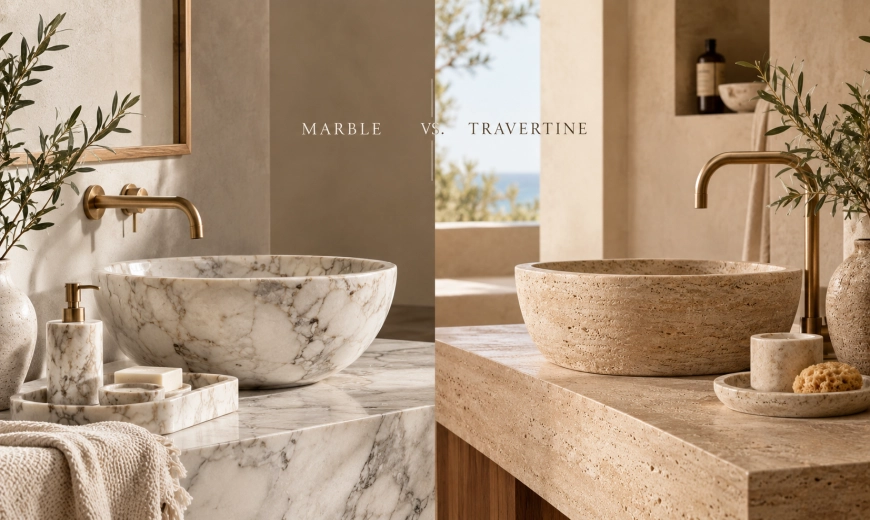
Natural stone has been part of Turkish architecture and craftsmanship for centuries. Marble and travertine remain especially important materials, appreciated for their durability, organic patterns, and ability to age gracefully.
In a contemporary home, stone does not need to dominate an entire room. A smaller piece can create the same connection with nature while keeping the overall space calm and refined.
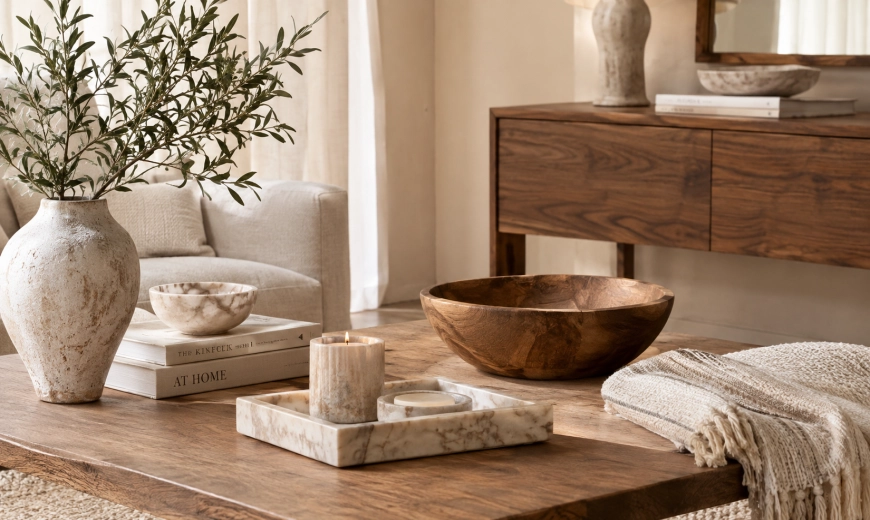
A marble decorative tray, for example, can be used on a coffee table, console, or bathroom surface. Its natural variation adds visual interest while maintaining a simple appearance.
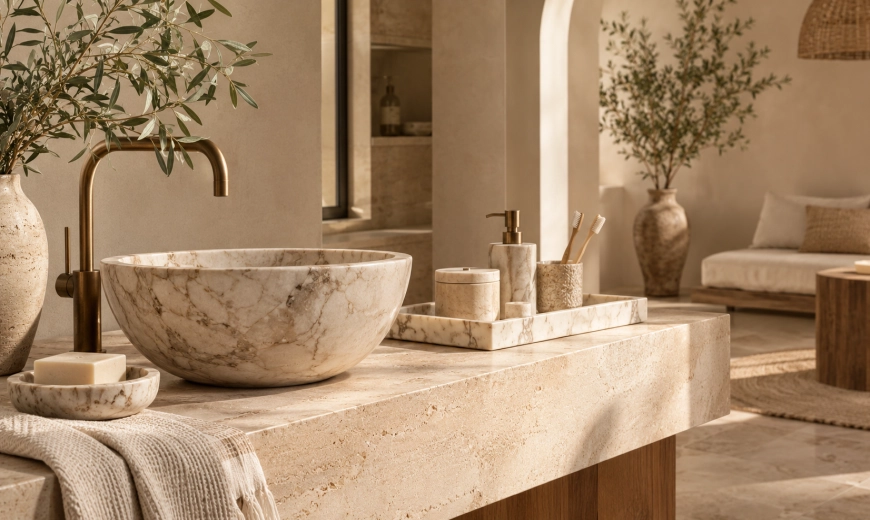
For the bathroom, a natural marble bathroom sink can become a functional architectural element, combining everyday use with the character of natural stone.
The Warmth of Solid Wood
Wood brings something different to an interior. While stone introduces a sense of permanence and structure, wood adds warmth, softness, and a natural connection to the surrounding environment.
Solid wood furniture works particularly well in modern interiors because it can soften minimal spaces without compromising their clean aesthetic.
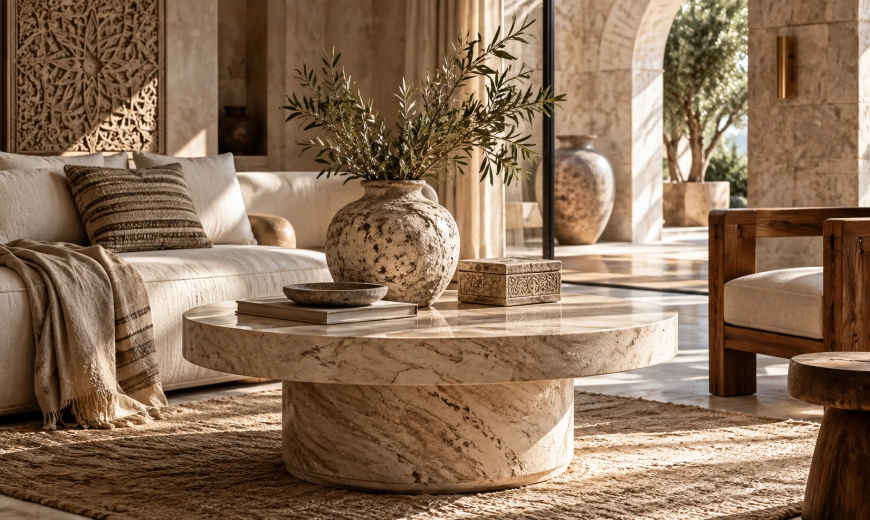
A solid wood dining table can become the centre of a dining space, while a wood coffee table can introduce natural texture into a living room.
The beauty of solid wood is that every piece has its own character. Grain patterns, knots, subtle colour variations, and changes that develop over time make the material feel authentic rather than manufactured.
Traditional Materials in Modern Spaces
One of the most interesting aspects of Turkish craftsmanship is how traditional materials can be interpreted in contemporary ways.
You do not need to create a traditionally styled interior to appreciate Turkish materials. Instead, combine them with modern furniture, neutral colours, architectural lighting, and uncluttered spaces.
For example, a contemporary living room can combine a simple sofa with a natural wood coffee table, a marble decorative object, and soft cotton textiles. The result is modern but not cold.
This balance between simplicity and material character is particularly suited to Mediterranean-inspired interiors.
Turkish Textiles: Softness and Texture
Turkey is also known for its rich textile traditions. Cotton towels, peshtemals, woven fabrics, and other textiles can add softness and texture to an otherwise minimal interior.
Natural textiles are particularly useful when creating relaxed spaces because they introduce visual layers without relying on strong colours or complicated patterns.
A simple cotton textile can be folded over a bench, placed at the end of a bed, or used as part of a relaxed bathroom setting. The material itself becomes part of the decoration.
Why Handmade Details Matter
Mass-produced interiors can sometimes feel visually repetitive. Handmade objects offer another approach: instead of trying to make every piece identical, they allow subtle variations to become part of the design.
A handmade object may have slightly different edges, natural stone markings, variations in wood grain, or small differences in texture. These characteristics create a sense of individuality.
For a modern home, just a few carefully selected handmade pieces can make a significant difference.
How to Introduce Turkish Craftsmanship Into Your Home
You do not need to completely redesign your home. Start with a few natural and functional pieces.
- Choose natural stone: Add marble or travertine through bathroom pieces, trays, candle holders, or decorative objects.
- Add solid wood: Use a wooden table, nightstand, console, or coffee table to introduce warmth.
- Layer natural textiles: Choose cotton and other breathable materials for softness and texture.
- Keep the colour palette calm: Warm whites, beige, sand, stone, natural wood, and muted earth tones allow materials to become the focus.
- Mix old and new: Combine traditional materials with contemporary furniture and modern architecture.
- Let materials speak: Avoid excessive decoration. A beautiful natural material often needs very little around it.
Craftsmanship and the Mediterranean Interior
Turkish craftsmanship naturally complements Mediterranean interior design. Both approaches value natural materials, practical objects, relaxed spaces, and a connection with the surrounding landscape.
Warm wood, natural stone, cotton textiles, handmade ceramics, and softly textured surfaces can create a home that feels comfortable rather than overly styled.
For those drawn to this aesthetic, the Mediterranean Collection brings together natural textures and timeless forms inspired by relaxed Mediterranean living.
The Beauty of Imperfection
Perhaps the most important quality of handmade craftsmanship is that it does not try to hide the individuality of natural materials.
Every piece of marble has its own veining. Every piece of wood has its own grain. Natural textiles have their own texture and character. These variations make each object feel connected to the material from which it was created.
In an increasingly digital and mass-produced world, these details can bring something meaningful into our homes: a sense of material, place, and human touch.
Turkish Craftsmanship at DYM Living
At DYM Living, we are inspired by the relationship between natural materials, traditional craftsmanship, and contemporary living.
Our approach focuses on materials such as marble, travertine, solid wood, and natural textiles, interpreted through simple and functional forms.
Explore the Natural Stone Collection for pieces shaped by the natural character of stone, or discover the Solid Wood Collection for furniture and objects that bring warmth and natural texture into modern spaces.
For us, craftsmanship is not simply about preserving traditional techniques. It is about giving natural materials a place in contemporary life.
Final Thoughts
The beauty of Turkish craftsmanship lies in its ability to connect material, tradition, and modern living.
Marble, travertine, solid wood, and natural textiles can all become part of a contemporary home without making it feel traditional or overly decorated. Their natural variations bring warmth, authenticity, and character to simple spaces.
By choosing fewer, better-made pieces and allowing natural materials to take centre stage, a modern interior can become calmer, warmer, and more personal.
Explore DYM Living to discover natural-material furniture, home decor, bath pieces, and textiles inspired by Turkish craftsmanship and Mediterranean living.