Turkish cotton textiles have a long-standing place in everyday life, combining practicality, softness, natural materials, and understated beauty. From traditional peshtemals to lightweight towels and simple home accessories, these textiles can bring warmth and texture to both modern and Mediterranean interiors.
Today, Turkish cotton is appreciated not only for its everyday functionality but also for its versatility in home styling. A well-made cotton towel can become part of a calm bathroom aesthetic, while a woven peshtemal can be used at the beach, beside a bath, over a chair, or as a light decorative layer.
What Makes Turkish Cotton Textiles Special?
Turkish cotton textiles are valued for their combination of softness, absorbency, breathability, and lightweight construction. Depending on the weave and finish, they can feel comfortable against the skin while remaining practical for everyday use.
Natural cotton also works particularly well with relaxed interior styles. Its tactile surface adds subtle texture without making a room feel visually busy, making it a natural choice for Mediterranean, coastal, minimalist, and contemporary homes.
Turkish Cotton Towels
A good towel is one of the simplest ways to improve the everyday experience of a bathroom. Turkish cotton towels can combine softness with a lightweight feel, making them suitable for daily bathing, guest bathrooms, spas, and travel.
For a calm bathroom atmosphere, choose towels in natural or muted shades such as ivory, sand, beige, stone, soft grey, or warm white. These colours work especially well alongside natural materials such as marble, travertine, wood, and stone.
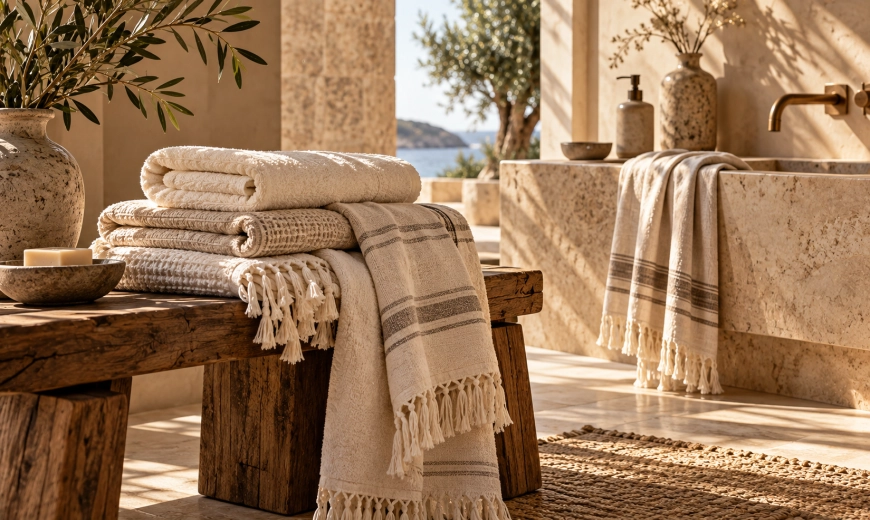
Instead of hiding towels inside a cabinet, consider displaying a few neatly folded pieces on an open shelf or a simple wooden stool. The textile itself becomes part of the room's decoration.
What Is a Peshtemal?
A peshtemal is a lightweight woven textile traditionally associated with Turkish bathing culture. Its thin construction makes it highly versatile and easy to carry, while its woven texture gives it a distinctive handcrafted character.
Although traditionally used in Turkish baths, peshtemals have become popular in modern homes because they can serve many different purposes.
- As a lightweight bath towel
- As a beach or pool towel
- As a travel textile
- As a light throw for a chair or sofa
- As a decorative layer on a bed
- As a simple picnic or outdoor textile
This versatility makes the peshtemal particularly suitable for relaxed coastal and Mediterranean interiors.
How to Style Peshtemals at Home
You do not need a large collection of accessories to create a warm and inviting interior. One carefully chosen peshtemal can introduce colour, texture, and movement into an otherwise simple space.
In the Bathroom
Fold a peshtemal over a towel rail or place it loosely beside a basin. Pair it with natural stone accessories for a relaxed spa-inspired look.
For example, a soft cotton textile can work beautifully with a marble soap dish or a marble bathroom tray. The contrast between soft woven cotton and solid natural stone creates a simple but sophisticated material balance.
In the Bedroom
A peshtemal can also be used as a lightweight decorative layer at the end of a bed. Choose a neutral colour when the room already contains several textures, or introduce a subtle pattern when the rest of the room is kept simple.
Natural textiles work especially well with solid wood furniture because both materials bring warmth and tactile character into the room.
In the Living Room
Folded over the arm of a chair or casually placed across a sofa, a cotton textile can soften a room without adding unnecessary decoration. This is particularly effective in interiors built around wood, linen, stone, and other natural materials.
Choosing the Right Cotton Textile
When choosing a cotton textile for your home, consider more than colour. The weave, weight, texture, size, and intended use all influence how useful and comfortable the textile will be.
Consider the Weight
Lightweight textiles are practical for travel, warm climates, beaches, and everyday bathroom use. Heavier cotton textiles may provide a more substantial feel and can work well as decorative throws or larger home accessories.
Look at the Texture
Texture is one of the easiest ways to make a neutral interior feel more interesting. Woven cotton, fringed edges, subtle stripes, and natural variations can add depth without relying on strong colours.
Choose Colours That Work With Your Interior
For a timeless look, natural shades such as cream, sand, beige, taupe, stone, and soft grey are easy to combine with wood and natural stone.
If your room is mostly neutral, a muted blue or earthy tone can introduce a gentle Mediterranean influence without overwhelming the space.
Turkish Cotton in a Mediterranean Home
Natural textiles are an important part of the relaxed character associated with Mediterranean interiors. The style does not depend on excessive decoration. Instead, it often combines simple furniture, natural materials, warm neutrals, handmade details, and comfortable textiles.
A cotton towel beside a stone basin, a woven peshtemal over a wooden chair, or a soft textile placed over a linen-covered bed can create this feeling through small details.
For more inspiration, explore the Mediterranean Collection for natural materials and relaxed pieces that complement this style.
Pairing Cotton With Natural Materials
One of the strengths of natural cotton is how easily it works with other materials.
- Cotton + Marble: Soft textile textures balance the cool, solid character of marble.
- Cotton + Travertine: Both materials work naturally within warm, earthy bathrooms.
- Cotton + Solid Wood: Wood adds warmth while cotton introduces softness.
- Cotton + Linen: Different natural fibres create a layered and relaxed textile palette.
- Cotton + Stone: The contrast between rough or smooth stone and woven fabric adds visual depth.
This approach is especially useful when creating a home that feels natural without looking overly decorated.
How to Care for Cotton Textiles
Always follow the individual care instructions supplied with your textile, as washing and drying recommendations can vary depending on the weave, finish, and construction.
In general, avoid unnecessarily harsh treatment and allow textiles to dry thoroughly between uses. Proper care can help maintain the softness, texture, and appearance of cotton over time.
For towels and frequently used bathroom textiles, allowing enough ventilation between uses is particularly important.
Simple Textiles, Lasting Style
The beauty of Turkish cotton textiles is their ability to combine everyday function with understated design. A towel does not have to be purely practical, and a peshtemal does not have to stay in the bathroom.
Used thoughtfully, natural cotton textiles can become part of the visual language of a home. They add softness to stone, warmth to wood, and texture to neutral spaces while remaining useful in everyday life.
At DYM Living, we believe that good interiors are built around natural materials, thoughtful details, and pieces that remain useful beyond changing trends. Explore our collection of natural home products and discover simple pieces designed for relaxed, timeless living.
Frequently Asked Questions
Are Turkish cotton towels good for everyday use?
Yes. Turkish cotton towels can be suitable for everyday use thanks to their softness, absorbency, and practical construction. The exact characteristics depend on the textile and weave.
What is the difference between a peshtemal and a traditional towel?
A peshtemal is generally thinner and lighter than a conventional terry towel. Its lightweight construction makes it easy to carry and gives it additional uses around the home, beach, pool, or spa.
Can I use a peshtemal as a home decoration?
Yes. A peshtemal can be draped over a chair, sofa, bench, or bed to introduce a layer of natural texture and colour.
What colours work best with Turkish cotton textiles?
Natural shades such as ivory, cream, beige, sand, stone, and soft grey are versatile choices. Muted blue and earthy tones can also work well in Mediterranean and coastal interiors.
How should I care for Turkish cotton textiles?
Follow the care instructions provided with the individual product. In general, gentle washing and thorough drying can help maintain the textile's texture and longevity.