Small rooms can often feel darker, tighter, and more crowded than they really are. One of the simplest ways to create a greater sense of space is to introduce a well-positioned floor mirror.
A large mirror can reflect natural light, visually extend the room, and create the impression of greater depth without requiring additional furniture or major changes to the space. When combined with natural materials, warm neutral colours, and simple furniture, a floor mirror can also become an elegant decorative feature.
Why Floor Mirrors Work in Small Rooms
Mirrors change the way we perceive a room. Instead of simply adding another decorative object, a large mirror reflects the surrounding space and light, making the room appear more open.
A floor mirror is particularly useful because its vertical proportions can draw the eye upward. This can make a room with a low ceiling feel taller while also creating a stronger sense of balance.
For small bedrooms, entryways, living rooms, and dressing areas, a full-length mirror can provide both practical functionality and visual depth.
1. Choose a Large Mirror
One of the most common mistakes in a small room is choosing a mirror that is too small. A larger mirror can have a much greater visual impact because it reflects more of the room.
A full-length floor mirror can work especially well when placed against a wall. Rather than breaking the wall into several small decorative elements, one large mirror creates a cleaner and more continuous visual surface.
For a natural interior, consider a mirror with a wooden frame or another material that complements the existing furniture.
2. Place the Mirror Near a Window
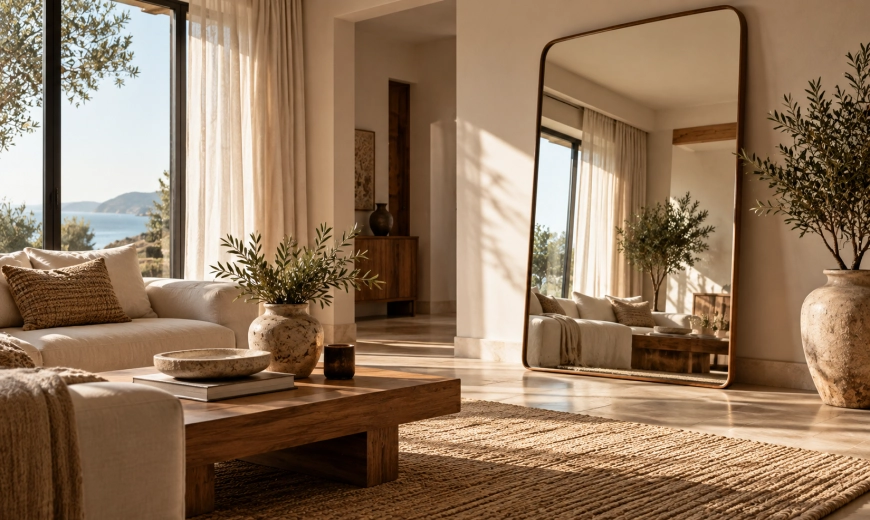
Natural light is one of the most effective ways to make a small room feel brighter. Positioning a floor mirror where it can reflect daylight can help distribute light throughout the space.
You do not necessarily need to place the mirror directly opposite the window. A slightly angled position can create a softer reflection while still helping to increase the brightness of the room.
This approach works particularly well in homes with neutral walls, linen curtains, natural wood, and other light-toned materials.
3. Use the Mirror to Reflect a Beautiful View
A mirror does not only reflect light. It also reflects whatever is positioned in front of it.
If possible, place your mirror so that it reflects an attractive part of the room, such as a window, a piece of natural wood furniture, a plant, or a carefully styled corner.
Avoid positioning the mirror where it reflects clutter, storage areas, or busy surfaces. The reflection becomes part of the room's visual composition.
4. Create Height With a Floor Mirror
Vertical elements can make a compact room feel taller. A full-length floor mirror naturally introduces height without taking up much floor space.
In a bedroom, a tall mirror can be positioned beside a wardrobe or near a dressing area. In a living room, it can be placed against a relatively empty wall to create a strong vertical feature.
For narrow entryways, a tall mirror can also help visually expand the corridor while providing a practical place for a final look before leaving home.
5. Keep the Surrounding Area Simple
A large mirror already creates a strong visual feature, so the surrounding area does not need to be heavily decorated.
Keep the space around the mirror relatively open. One wooden stool, a small plant, a woven basket, or a simple textile can be enough to create a finished look.
This approach is especially effective in natural and Mediterranean-inspired interiors, where simplicity and material quality are often more important than excessive decoration.
6. Choose Natural Materials
The frame of a floor mirror can influence the entire character of a room. Natural wood, for example, can introduce warmth and texture while keeping the overall look understated.
Wood works particularly well with linen, cotton, stone, marble, travertine, and other natural materials. This combination creates a relaxed atmosphere without making the room feel visually crowded.
For interiors inspired by Mediterranean living, a natural wood mirror can be paired with warm neutrals, textured fabrics, stone surfaces, and soft daylight.
7. Use Mirrors in Different Rooms
Small Bedroom
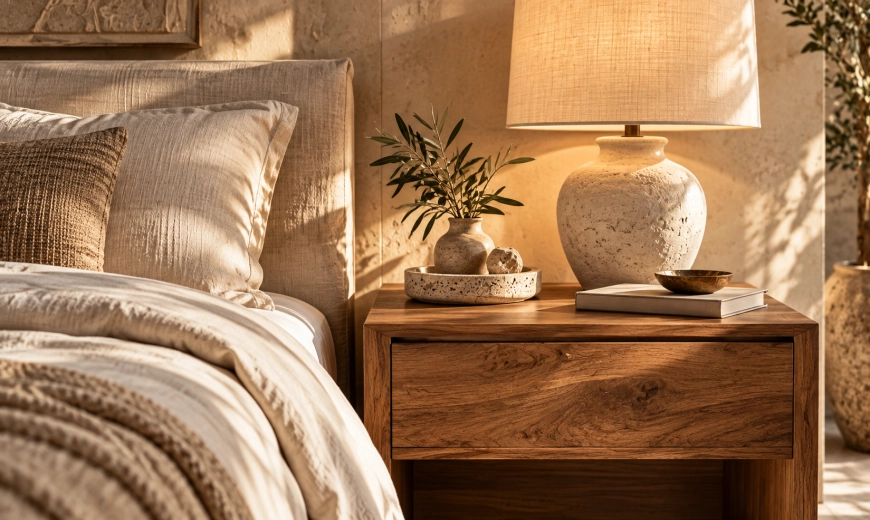
A full-length mirror can be placed beside a wardrobe, dresser, or near the entrance of the bedroom. Pair it with a simple wooden nightstand and soft natural textiles for a calm and uncluttered atmosphere.
You can explore the Solid Wood Nightstand as an example of how natural wood furniture can complement a relaxed bedroom interior.
Small Living Room
In a compact living room, position a floor mirror against an empty wall or beside a seating area. A large mirror can visually extend the room while adding a decorative focal point.
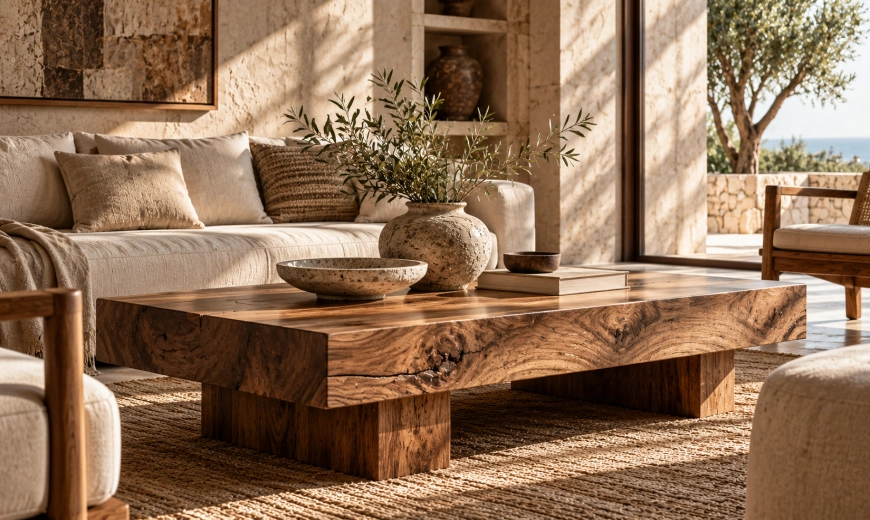
Combine it with simple furniture such as a Wood Coffee Table to create a warm and balanced interior.
Narrow Entryway
Entryways are often among the smallest areas of a home. A tall mirror can make the space feel wider while providing a practical function.
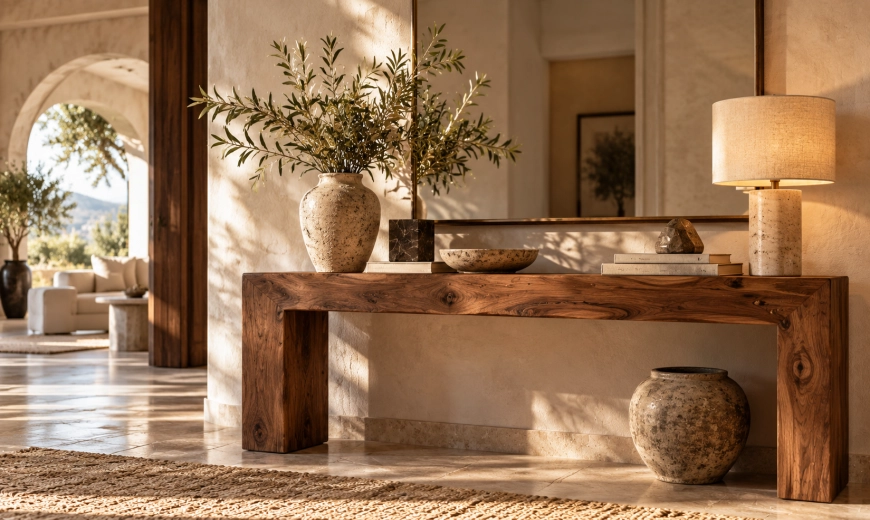
Keep the rest of the entryway minimal. A small wooden console, a basket, or a natural textile can be enough to complete the space.
Floor Mirror Styling Ideas
For a warm and natural interior, try combining your floor mirror with a few carefully selected materials:
- Natural wood furniture
- Linen curtains and cushions
- Neutral cotton textiles
- Travertine or marble accents
- Indoor plants
- Woven baskets
- Warm neutral walls
- Soft natural lighting
The goal is not to fill the room with decorative objects. Instead, use a few natural elements to create texture and visual balance.
Oversized Floor Mirrors for a More Spacious Look
If your room allows enough wall and floor space, an oversized mirror can create an even stronger sense of openness.
The Oversized Floor Mirror can be used as a statement piece in bedrooms, living rooms, dressing areas, and spacious entryways.
Its large surface helps reflect more of the surrounding interior while its vertical form adds height to the room. When paired with natural materials and understated furniture, it can become both a functional object and a defining decorative element.
Don't Overdecorate the Room
Making a small room feel larger is not only about adding mirrors. It is also about reducing visual noise.
Choose furniture with simple silhouettes, leave enough open space around larger pieces, and avoid filling every available surface with decoration.
A carefully positioned floor mirror, a few natural textures, and well-chosen furniture can often achieve more than a room filled with accessories.
A Simple Formula for Small Spaces
If you are decorating a compact room, consider this simple combination:
- One large floor mirror
- Light or warm neutral colours
- Natural wood furniture
- Soft textiles
- One or two plants
- Plenty of open floor space
- Natural daylight wherever possible
This approach creates a room that feels brighter, calmer, and more spacious without requiring major structural changes.
Final Thoughts
A floor mirror can be one of the simplest tools for visually expanding a small room. When positioned carefully, it can reflect natural light, introduce height, and create a greater sense of depth.
The most successful interiors do not rely on decoration alone. Natural materials, thoughtful proportions, soft textures, and open space can work together to create a home that feels comfortable and timeless.
At DYM Living, we focus on natural materials, simple forms, and timeless pieces designed to bring warmth and character into everyday spaces. Explore our Mirrors and discover natural pieces for creating a lighter and more balanced home.