Marble and travertine have been used in architecture and interiors for centuries, valued for their natural beauty, distinctive textures, and ability to age gracefully. Today, both materials continue to bring warmth, character, and a sense of permanence to contemporary homes.
Although marble and travertine are both natural stones, they create noticeably different visual and tactile experiences. Understanding their differences can help you choose the right material for your bathroom, living room, entryway, or decorative details.
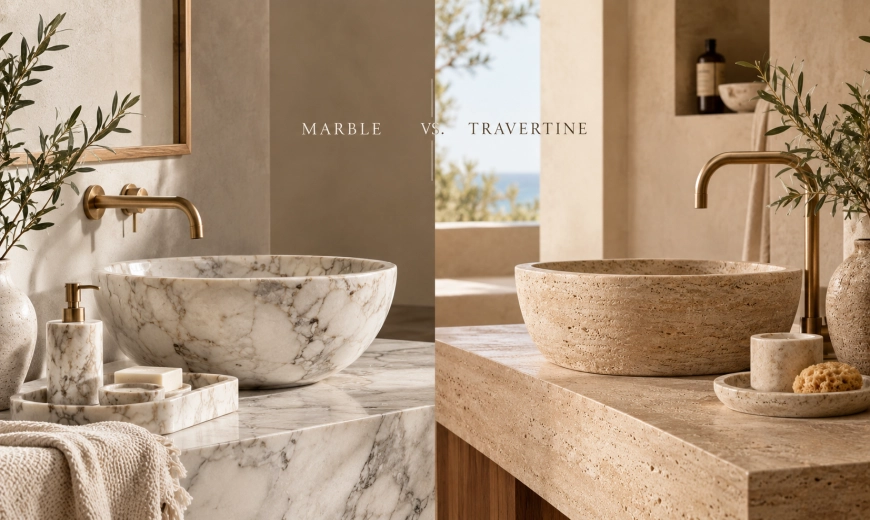
Marble vs. Travertine: What Is the Difference?
Marble is a metamorphic natural stone known for its elegant veining, smooth surface, and sophisticated appearance. Depending on the variety, marble can range from bright white and soft cream to dramatic shades with distinctive veins and patterns.
Travertine, on the other hand, is a form of limestone created through mineral deposits around natural springs. It is recognized by its warm earthy tones, subtle movement, and naturally porous texture.
Both materials are unique because no two pieces are exactly alike. Their natural variations are part of what makes stone such a lasting choice for interiors.
1. Appearance and Character
If you are looking for a refined and elegant appearance, marble offers a wide range of visual possibilities. Its characteristic veining can become a focal point in a room, particularly when used for countertops, basins, trays, or architectural details.
Travertine has a softer and more organic character. Its beige, ivory, sand, and warm neutral tones work especially well with wood, linen, ceramics, and natural textiles.
This makes travertine particularly suitable for Mediterranean-inspired, rustic-modern, organic, and relaxed interiors.
2. Marble for an Elegant Interior
Marble can introduce a sense of sophistication without requiring excessive decoration. A single marble element can become an important visual feature in an otherwise simple room.
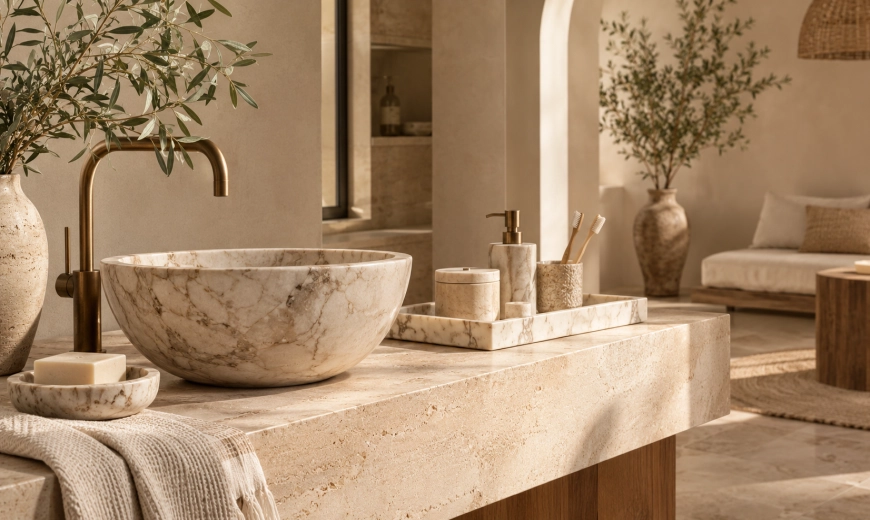
For example, a natural marble bathroom sink can transform a functional bathroom into a more architectural and considered space. In smaller applications, marble trays and soap dishes provide the same material character on a more subtle scale.
Explore the DYM Living Natural Stone Collection for natural stone pieces designed to bring this character into everyday interiors.
3. Travertine for Warmth and Texture
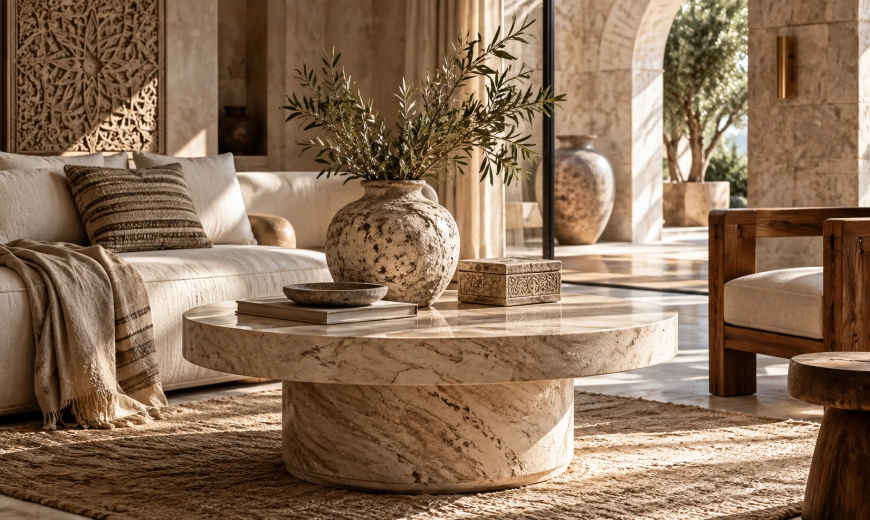
Travertine has a naturally warm appearance that makes spaces feel grounded and inviting. Its softly textured surface works particularly well when paired with other natural materials.
A travertine sink, candle holder, or decorative object can introduce this material without making the room feel overly formal.
The Natural Travertine Candle Holder is one example of how the stone can be used as a small decorative accent, adding earthy texture and a warm Mediterranean feeling.
4. Which Stone Works Better in a Bathroom?
Both marble and travertine can create beautiful bathroom interiors. The choice often depends more on the atmosphere you want to create than on appearance alone.
Marble is ideal when you want a bathroom to feel refined, clean, and architectural. Its veining can provide a strong focal point around a basin or vanity.
Travertine creates a softer, warmer atmosphere and works beautifully with natural wood, brushed metal, linen, and neutral ceramics.
For a sculptural focal point, explore the Natural Marble Bathroom Sink or the Travertine Sink.
5. Marble and Travertine in Small Details
You do not need to renovate an entire room to introduce natural stone into your home. Smaller accessories can create the same sense of material richness while allowing you to experiment with the look.
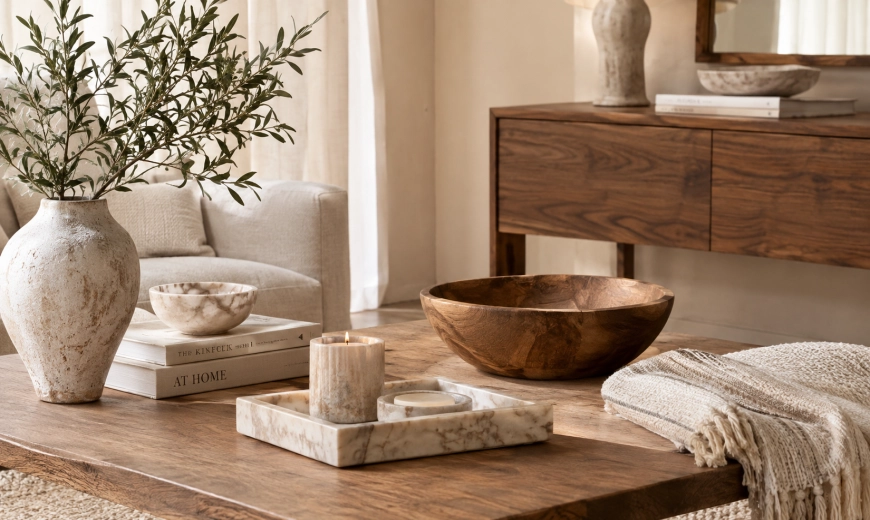
A marble tray on a coffee table, a stone bowl on a console, or a travertine candle holder on a bedside table can add texture and visual depth without overwhelming the room.
Consider a Marble Decorative Tray for coffee tables, consoles, vanities, or bathroom surfaces.
For a softer everyday accent, a Natural Stone Bowl can add sculptural form and organic texture to a shelf, console, or dining area.
6. Marble vs. Travertine: Texture
One of the most noticeable differences between these materials is their surface character.
Marble is often associated with a smoother and more polished appearance. Its surface can emphasize the movement of the natural veining and create a more refined visual effect.
Travertine tends to feel more tactile and organic. Its natural pores, variations, and earthy coloration contribute to a relaxed appearance.
If your interior already contains many smooth surfaces, travertine can introduce valuable texture. If you prefer a cleaner and more sophisticated material contrast, marble may be the better visual choice.
7. Which Stone Is Easier to Style?
Marble works particularly well with minimalist, contemporary, classic, and modern interiors. It can be paired with dark wood, metal, glass, neutral textiles, or bold architectural elements.
Travertine naturally complements warm woods, linen, woven materials, ceramics, terracotta, and Mediterranean-inspired interiors.
Neither material needs to dominate the room. In many interiors, the most successful approach is to use natural stone alongside other organic materials and allow each texture to contribute to the overall balance.
8. Caring for Natural Stone
Natural stone is durable, but it benefits from thoughtful care. Marble and travertine can be sensitive to acidic substances and harsh cleaning products, so gentle, stone-appropriate cleaning methods are recommended.
Regular cleaning with suitable products helps preserve the natural appearance of the stone. Depending on the application and finish, professional sealing may also be appropriate.
The most important principle is simple: natural stone should be treated as a natural material rather than as an entirely uniform manufactured surface. Small variations in color, pattern, texture, and veining are part of its character.
Marble or Travertine: Which One Should You Choose?
There is no single choice that works for every interior. The right stone depends on the atmosphere, color palette, room, and level of visual texture you want to introduce.
- Choose marble if you prefer elegant veining, a refined appearance, and a more architectural feel.
- Choose travertine if you prefer warm neutral tones, organic texture, and a relaxed Mediterranean atmosphere.
- Choose both if you want to combine sophisticated stone surfaces with warmer, more tactile natural textures.
Creating a Timeless Interior With Natural Stone
Marble and travertine are more than surface materials. Their natural variations bring depth, texture, and individuality to a space. Unlike highly uniform decorative materials, natural stone develops a visual relationship with light, wood, textiles, and the surrounding architecture.
Whether you introduce stone through a bathroom basin, a decorative tray, a sculptural bowl, or a small candle holder, even one carefully selected piece can change the character of a room.
Discover more natural materials and stone pieces in the Natural Stone Collection and explore the timeless textures of marble and travertine for your home.
Explore Natural Stone
Discover marble and travertine pieces created to bring natural texture, timeless character, and Mediterranean-inspired simplicity into your home.